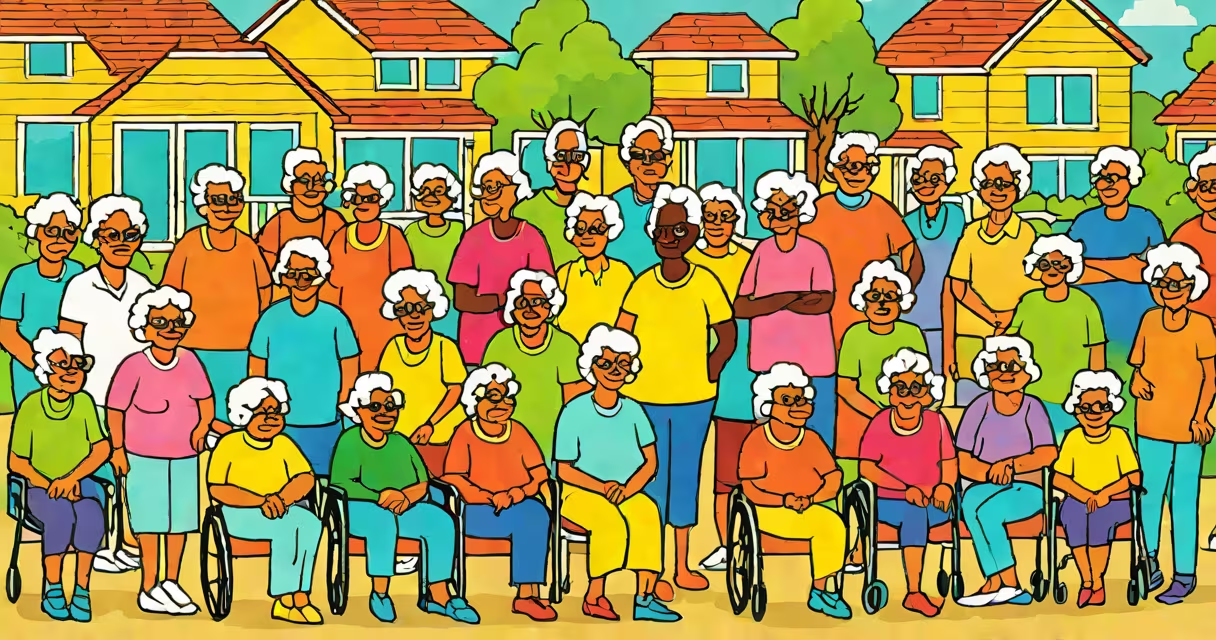
Ageism is the systematic stereotyping, prejudice, or discrimination against individuals based on their age, most commonly targeting older adults. It arises from assumptions about diminished ability, relevance, or value due to aging, leading to exclusion in employment, healthcare, and social roles.
Ageism operates through both overt actions and subtle cultural norms. It appears in job postings excluding candidates over 50, medical decisions de-prioritizing treatment for seniors, or media portrayals reducing older people to comic relief or helpless dependents. These patterns reflect internalized beliefs about aging as decline rather than a phase with continued contribution.
The World Health Organization defines ageism as "a form of discrimination that affects people's lives, health, and well-being." This includes institutional policies that assume older workers are less adaptable, or clinical guidelines that limit life-extending care for patients over 75. Such biases are not limited to personal opinions-they shape laws, budgets, and daily interactions.
Ageism functions through cognitive shortcuts that assign traits to entire age groups. For example, assuming all people over 65 are forgetful or technologically inept leads to exclusion from digital services or leadership roles. These assumptions are not based on individual capability but on generalized stereotypes.
In workplaces, ageism surfaces in hiring freezes for applicants over 50, performance evaluations that penalize longer tenure, or mandatory retirement policies. A 2021 study by AARP found that 64% of workers aged 45-74 reported experiencing age-related bias at work, including being passed over for promotions or training opportunities.
Healthcare settings show similar patterns. Research published in *The Lancet* (2022) revealed that doctors were less likely to recommend cardiac resuscitation for patients over 80 compared to younger peers-even when clinical outcomes were comparable. This reflects a belief that quality of life diminishes with age, despite evidence showing many older adults maintain high functional capacity and satisfaction.
Ageism is frequently mistaken for generational conflict or personal grudges. But it is structural and systemic. Unlike temporary friction between age groups, ageism involves power imbalances-older people are often denied access to resources, respect, or agency.
Another misconception is that ageism only harms older adults. While most visible in anti-elder bias, it also impacts younger people. Teenagers and young adults face marginalization in hiring due to perceived lack of experience, while children are excluded from decision-making processes in education and family policy. The United Nations notes that ageism affects all ages, though the targets shift across the lifespan.
A non-obvious distinction: ageism is not simply negative attitudes toward aging-it is action-based discrimination. A person may hold positive views of older adults while still engaging in ageist behavior, such as refusing to hire someone because they "don't fit the team culture" or "seem too slow." These decisions reflect unconscious bias, not explicit hostility.
Consider the case of Mary, a 63-year-old software engineer laid off during a company restructuring. Her manager cited "cultural fit" and "adaptability concerns," despite her 20 years of consistent performance and recent certifications. She was replaced by a 32-year-old with fewer qualifications. Her application to a local tech incubator was rejected on the grounds that she "lacked startup energy."
This scenario reflects documented patterns. A 2020 report by the National Employment Law Project found that job seekers over 50 faced 50% longer unemployment durations than younger peers, even when qualified. The U.S. Equal Employment Opportunity Commission (EEOC) recorded over 12,000 age discrimination complaints annually between 2015 and 2020, with 70% dismissed due to insufficient evidence-indicating systemic barriers to proving bias.
Even in public health, ageism influences outcomes. During the early phases of the COVID-19 pandemic, triage protocols in some regions prioritized younger patients for ICU beds based on projected survival rates. While intended to maximize lives saved, these decisions were rooted in age-based assumptions about long-term value, raising ethical concerns about the devaluation of older lives.
| Type | Description | Example |
|---|---|---|
| Internalized | Individuals adopt negative beliefs about aging, affecting self-worth and health behaviors. | An 80-year-old avoids exercise due to fear of injury, reinforcing physical decline. |
| Interpersonal | Direct discrimination in personal interactions. | A doctor dismisses a patient's pain as "just old age" without testing. |
| Institutional | Policies that disadvantage certain age groups. | Employers requiring "digital fluency" in job ads, excluding older applicants. |
| Self-directed | When individuals apply ageist standards to themselves. | A 70-year-old stops applying for jobs after hearing "they don't hire people your age." |
I once observed a senior citizen group in a community center trying to launch a neighborhood food co-op. Their proposal was repeatedly ignored by city planners who said, "This is not a priority for our current demographic." The project was eventually funded only after a younger resident took credit for the idea. That moment exposed how ageism distorts recognition and legitimacy.
Understanding the definition of ageism is essential for identifying and challenging it. Without clear terminology, discriminatory patterns go unchallenged. The WHO's Global Report on Ageism (2021) emphasizes that naming the issue is the first step toward reform. When institutions recognize ageism as a human rights concern, they can implement accountability measures, inclusive design, and equitable policies.
For example, the UK's Equality Act 2010 explicitly prohibits age discrimination in employment, education, and service provision. Employers must justify any age-based criteria in hiring, and individuals can file formal complaints. Similar frameworks exist in Canada and Germany, showing that legal recognition enables enforcement.
Recognizing ageism isn't about rejecting aging-it's about affirming the right of all people, regardless of age, to participate fully in society. It's about ensuring that a 75-year-old can access the same medical treatments as a 35-year-old, or that a 22-year-old can lead a team without being dismissed as "too inexperienced."
When we understand the definition of ageism, we see it not as a personal failing but as a societal structure that limits potential. Addressing it requires changes in language, policy, and practice-from rewriting job descriptions to redesigning public spaces for accessibility. The goal is not to eliminate age differences but to stop treating them as reasons for exclusion.