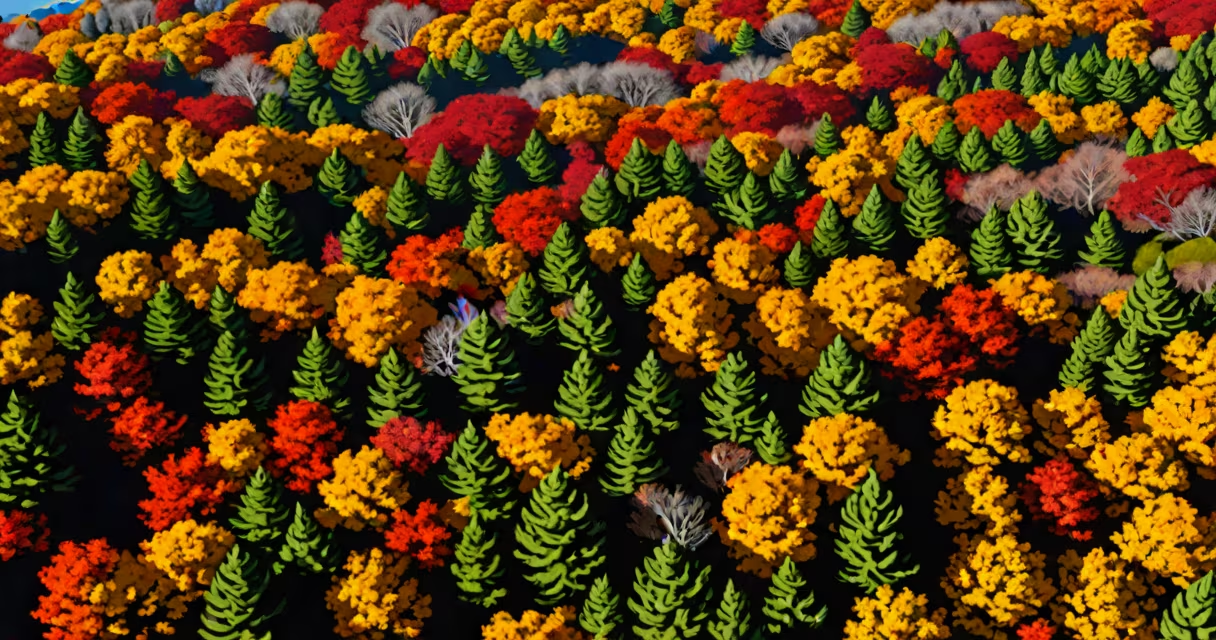
temperate forest climate describes a region with four distinct seasons, moderate annual precipitation (75-150 cm), and temperatures ranging from −30°C to 30°C. These conditions support broadleaf deciduous forests dominated by species like oak, maple, and beech.
This climate zone lies between 30° and 60° latitude in both hemispheres, primarily in eastern North America, western Europe, and parts of East Asia. It results from mid-latitude atmospheric circulation patterns, including alternating high- and low-pressure systems driven by Earth's tilt and rotation.
Unlike tropical or arid climates, temperate forest climate avoids extreme heat or cold. Winters are cold enough to halt plant growth but not so severe that most species cannot survive. Summers provide sufficient warmth and moisture for rapid photosynthesis and leaf development. This balance enables dense canopy formation and rich soil development.
Atmospheric dynamics drive seasonal shifts. In winter, cold polar air masses descend, bringing snow and freezing temperatures. In summer, warm subtropical air moves northward, increasing humidity and triggering frequent thunderstorms. These transitions create sharp contrasts between seasons.
Soil in temperate forest regions develops deep organic layers due to seasonal leaf drop. Decomposition rates slow during winter, allowing humus to accumulate. This enriches the soil with nutrients like nitrogen and potassium, supporting diverse understory plants such as ferns, wildflowers, and shrubs.
For example, the Appalachian Mountains in the U.S. exhibit temperate forest climate with average January temperatures around −5°C and July highs near 25°C. Annual precipitation reaches 120 cm, mostly in spring and summer. Deciduous trees shed leaves each fall, reducing water loss during dormancy.
Temperate forest climate is defined by consistent seasonal cycles. Average temperatures range from −30°C in winter to 30°C in summer, with annual averages between 5°C and 15°C. Precipitation totals 75-150 cm per year, evenly distributed but often peaking in late spring and early summer.
| Feature | Typical Range | Impact on System |
|---|---|---|
| Winter temperature | −10°C to −30°C | Tree dormancy; reduced microbial activity |
| Summer temperature | 20°C to 30°C | Peak photosynthesis; rapid seedling growth |
| Annual precipitation | 75-150 cm | Supports deep root systems; limits drought stress |
| Soil pH | 5.5-7.0 | Favors nutrient availability; supports mycorrhizal fungi |
Regional differences exist. Eastern U.S. forests receive more rainfall than those in central Europe due to Atlantic moisture transport. In East Asia, monsoon influence adds seasonal variability, with higher summer rain volumes. These variations affect tree species composition and fire frequency.
A non-obvious fact: despite moderate rainfall, temperate forests have lower evapotranspiration rates than tropical forests. This occurs because leaf area index peaks in summer, but stomatal closure during dry spells reduces water loss. Soil moisture remains stable through winter due to insulating snow cover.
temperate forest climate is often confused with boreal forest climate. Boreal zones lie farther north, with colder winters (below −40°C), shorter growing seasons, and coniferous dominance. Temperate forests have longer growing periods and greater biodiversity.
Another misconception: temperate forests do not experience consistent mild weather. They endure significant seasonal swings. A study by the National Oceanic and Atmospheric Administration (NOAA) documented a 20°C temperature difference between winter and summer in the Midwest U.S., with daily extremes exceeding 30°C in summer.
Some assume all temperate forests are similar. In reality, they vary by continent. The temperate forests of northern California feature redwood trees adapted to coastal fog, while those in the eastern U.S. rely on periodic fires to maintain oak dominance. Fire suppression in the latter has led to increased shade-tolerant species like beech, altering forest structure.
temperate forest climate supports high levels of biodiversity. A single hectare in a New England hardwood forest may host over 100 native plant species, 30 bird species, and dozens of insect and mammal varieties. This diversity stems from seasonal resource availability and niche partitioning.
Human societies have long relied on these forests. In medieval Europe, oak forests supplied timber for shipbuilding and fuel. Today, temperate forests provide wood products, regulate water flow, and sequester carbon. The U.S. Forest Service estimates that temperate forests store approximately 150 metric tons of carbon per hectare, more than grasslands or croplands.
I once observed a small-scale restoration project in Pennsylvania where native oaks were planted in abandoned farmland. Within five years, the site developed a closed canopy and attracted songbirds and pollinators. The success was tied to matching planting timing with seasonal soil moisture and avoiding frost damage during establishment.
Climate change is altering temperate forest climate patterns. Warmer springs advance budburst dates by 3-5 days per decade, according to research published in *Nature Climate Change*. Earlier leaf-out increases vulnerability to late frosts. Shifts in precipitation timing reduce soil moisture during critical growth phases.
Understanding temperate forest climate helps predict system responses to environmental change. For instance, if summer droughts increase in frequency, species like sugar maple may decline due to reduced sap flow and root stress. Conservation planning must account for these shifts.
temperate forest climate shapes landscapes, sustains biodiversity, and influences human land use. Its defining traits-seasonal temperature swings, balanced precipitation, and rich soils-create stable yet changing environments where complex life thrives.