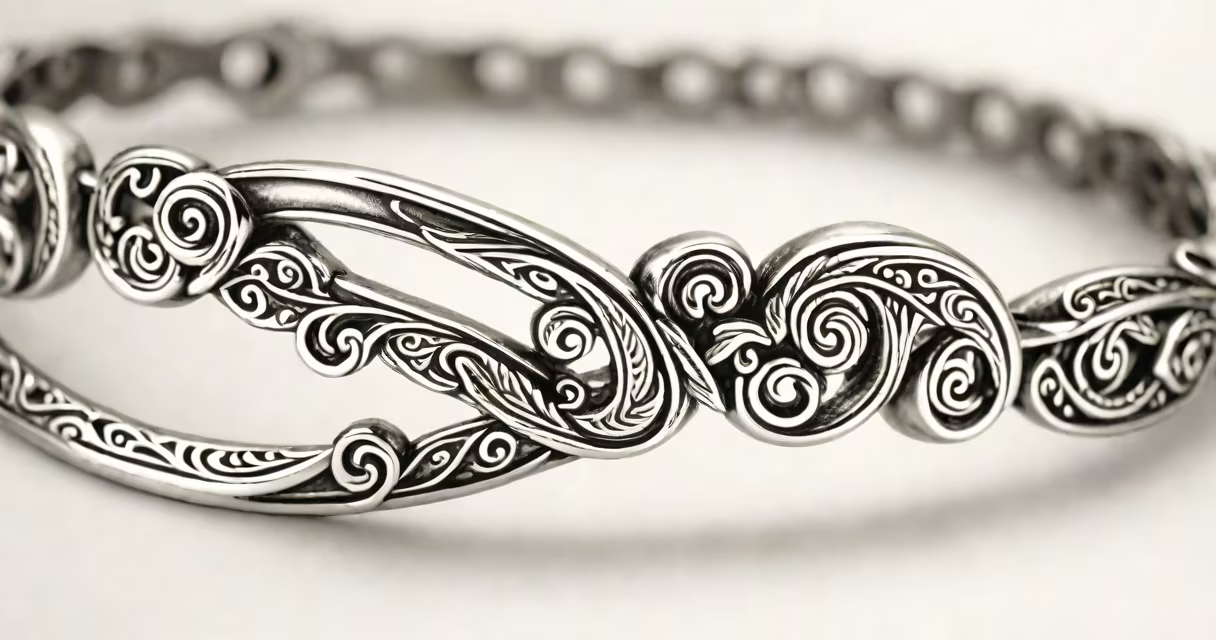
Sterling silver is a metal alloy composed of 92.5% pure silver and 7.5% copper, designed to balance durability and luster for practical use in jewelry, tableware, and decorative objects.
The term "sterling" originates from medieval England, where the standard was formalized in the 12th century. It's not a grade of silver but a specific alloy ratio recognized globally. The addition of copper strengthens the metal, preventing scratches and dents during regular handling-critical for rings, bracelets, and cutlery.
Manufacturers mark sterling silver with a sign, such as "925," ".925," or "Ster." These symbols indicate compliance with international standards set by the International Organization for Standardization (ISO) and national bodies like the UK's Assay Office. A sign is legally required in many countries for items sold as sterling silver.
Pure silver (99.9%) is too soft for most functional applications. It bends easily and tarnishes quickly. Adding copper increases hardness and resistance to deformation while maintaining a bright, reflective finish. Copper also slows oxidation, though sterling silver still requires occasional polishing to prevent surface discoloration.
When exposed to sulfur compounds in air, silver forms a thin layer of silver sulfide, causing tarnish. This is a natural process and does not degrade the metal's integrity. Cleaning with a soft cloth and mild soap restores shine. For deeper cleaning, professional jeweler services use ultrasonic baths or chemical dips.
Unlike gold, which is often plated or alloyed with base metals, silver's value lies in its elemental purity. Sterling silver is valued both for its aesthetic appeal and its market price as a commodity. Silver prices fluctuate based on industrial demand, especially in electronics and solar panels.
Sterling silver is defined by its precise composition: 92.5% silver, 7.5% copper. This ratio ensures structural stability without sacrificing visual quality. Some manufacturers may add trace elements like nickel or zinc for specific finishes, but these are not standard and must be disclosed.
| Type | Purity | Common Uses | Notes |
|---|---|---|---|
| Sterling Silver | 92.5% | Jewelry, flatware, art pieces | Standard for consumer goods |
| Fine Silver | 99.9% | Investment bars, bullion, high-end art | Too soft for daily wear |
| Plated Silver | Thin silver coating over base metal | Low-cost fashion accessories | Wears off over time |
Some items labeled "silver" are actually silver-plated-meaning they have a thin layer of silver over a cheaper metal like brass or nickel. These look similar but lack the weight and longevity of sterling silver. Plated items typically cost less than half the price of solid sterling pieces.
A key distinction: sterling silver is not inherently valuable based on appearance alone. A large, ornate bowl made of sterling silver may sell for more than a small ring due to material volume, but both share the same base composition. Value depends on craftsmanship, design, and market demand.
Sterling silver is widely used in fine jewelry because it holds complex designs well and reflects light beautifully. Its malleability allows artisans to craft filigree, engraving, and textured surfaces that would crack in harder metals. It's also popular in wedding bands, earrings, and pendants.
Tableware remains a major application. High-end restaurants and households use sterling silver cutlery and serving trays. The metal conducts heat evenly, keeps food warm longer, and adds elegance to dining settings. However, its use in kitchenware has declined due to cost and maintenance requirements.
Industrial applications include electrical contacts, solar panels, and catalysts. Silver's highest electrical conductivity among metals makes it ideal for precision electronics. According to the U.S. Geological Survey, about 15% of global silver demand comes from industrial sectors, with electronics being the largest segment.
One non-obvious fact: sterling silver is not immune to allergic reactions. While silver itself is hypoallergenic, the copper content can trigger skin irritation in sensitive individuals. This is why some manufacturers offer "nickel-free" or "hypoallergenic" versions, often marked with a "Ni-free" stamp.
Many assume that "sterling silver" means "high-quality silver." But quality depends on craftsmanship, not just alloy. A poorly made sterling silver necklace can tarnish faster and lose its polish compared to a well-crafted piece with proper care.
Another myth: sterling silver never tarnishes. It does-over time. The rate depends on environmental exposure. Humid climates accelerate tarnishing. Wearing sterling silver jewelry daily doesn't increase damage unless exposed to chlorine, perfumes, or lotions.
Some buyers confuse "sterling silver" with "silver plate." A silver-plated spoon may look identical to a sterling one but weighs less. A quick test: place a magnet near the item. Sterling silver is non-magnetic; plated items often contain ferrous metals underneath.
I once tested a vintage silver locket using a handheld spectrometer. It registered 92.3% silver-just below the 92.5% threshold. The manufacturer had missed the tolerance window by 0.2%. The piece was still usable but not legally classifiable as sterling. This shows that even small deviations matter in certification.
Consider a pair of earrings marked "925" on the back. They weigh 6.2 grams. To verify authenticity:
If the item lacks a sign or fails the density test, it's likely not sterling. Many counterfeit pieces use silver-plated brass, which has a lower density (8.4-8.7 g/cm³).