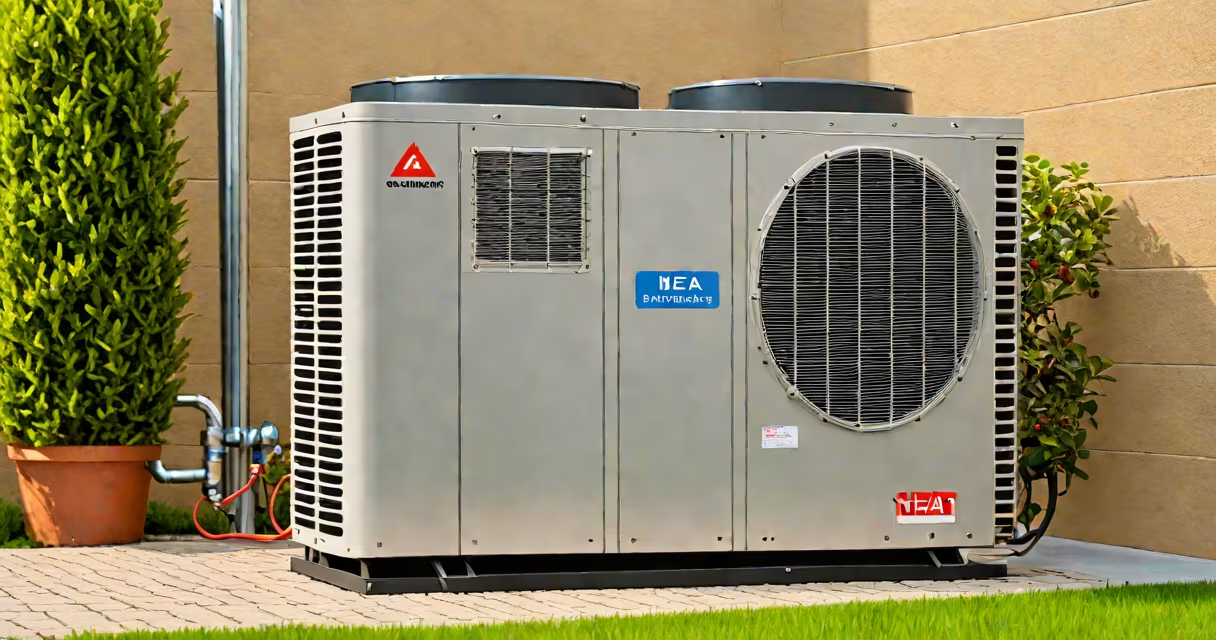
A heat pump transfers heat from a cooler space to a warmer one using electric power, enabling both heating and cooling without combustion. It moves existing thermal energy rather than generating heat, making it more efficient than furnaces or standard air conditioners.
Unlike conventional systems that burn fuel to create heat, a heat pump uses a refrigeration cycle to extract warmth from outdoor air, ground, or water-even when temperatures are below freezing-and delivers it indoors. In summer, it reverses the process, removing indoor heat and releasing it outside. This dual functionality replaces separate furnace and AC units.
The core purpose is energy efficiency: a typical heat pump produces 2.5 to 3.5 times more heating energy than the electrical energy it consumes. For every kilowatt-hour of electricity used, it delivers 2.5 to 3.5 kWh of heat. This ratio is known as the coefficient of performance (COP).
A heat pump operates through a closed-loop refrigeration cycle involving four main components: evaporator, compressor, condenser, and expansion valve. Refrigerant flows through these parts, absorbing and releasing heat at different stages.
In heating mode, cold outdoor air passes over the evaporator coil. The refrigerant absorbs low-grade heat from the air, turning into a low-pressure gas. The compressor increases the pressure and temperature of the gas. This hot high-pressure gas then flows through the condenser coil inside the home, releasing heat into the indoor air. After passing through the expansion valve, the refrigerant cools and returns to the evaporator to repeat the cycle.
For cooling, the refrigerant flow direction reverses via a reversing valve. Indoor air is drawn over the cold evaporator coil, absorbing heat. The warm refrigerant is compressed, sent outdoors, and cooled in the condenser before returning to the indoor unit.
Heat pumps are categorized by their heat source: air-source, ground-source (geothermal), and water-source. Air-source is most common in residential settings due to lower installation cost and widespread availability.
| Type | Heat Source | Efficiency (COP) | Best Use Case |
|---|---|---|---|
| Air-source | Outdoor air | 2.5-3.5 | Most homes in moderate climates |
| Ground-source | Subsurface soil or groundwater | 3.5-5.0 | Areas with extreme winters or high utility costs |
| Water-source | Lakes, rivers, or wells | 3.0-4.5 | Properties near large bodies of water |
Ground-source systems achieve higher COP values because underground temperatures remain stable year-round. A 2022 study by the U.S. Department of Energy found that geothermal heat pumps reduce annual energy consumption by 30-60% compared to air-source models in cold climates.
When paired with a ductless mini-split system, heat pumps can deliver precise zonal control. A 2021 report from the National Renewable Energy Laboratory (NREL) showed that ductless heat pumps reduced peak electricity demand by 22% in single-family homes during winter months.
Many assume heat pumps cannot work in cold weather. This is incorrect. Modern air-source heat pumps operate efficiently down to -15°F (-26°C). The U.S. Environmental Protection Agency (EPA) certifies models meeting ENERGY STAR® standards for cold-climate performance, including those tested in Minnesota and Vermont.
Another myth is that heat pumps are expensive to run. While electricity rates vary, the average U.S. household saves $300-$600 annually on heating and cooling costs with a heat pump versus a gas furnace and central AC. The savings come from higher efficiency and lower maintenance-no flue, no fuel delivery, no pilot light.
Some confuse heat pumps with air conditioners. All heat pumps include cooling capability, but not all air conditioners provide heating. A heat pump's ability to reverse the refrigeration cycle makes it a dual-purpose system.
A homeowner in Alexandria, VA, replaced a 15-year-old gas furnace and central AC with a 5 ton heat pump package unit. The system was sized based on Manual J load calculation, ensuring proper capacity for the 2,200 sq ft home.
During winter, the heat pump maintained indoor temperatures between 68-70°F with an average COP of 3.1. The homeowner reported a 41% reduction in annual energy bills-down from $2,100 to $1,240-despite rising electricity prices.
Summer cooling averaged 14.5 SEER2 (Seasonal Energy Efficiency Ratio 2), exceeding the minimum federal requirement. The system ran fewer hours than the old AC due to better humidity control and consistent airflow.
Installation included a smart thermostat and time-of-use rate optimization. By shifting operation to off-peak hours, the homeowner saved an additional $180/year on electricity.
Heat pumps are critical to decarbonizing residential heating. The International Energy Agency (IEA) estimates that replacing fossil-fuel heating with electric heat pumps could cut global CO₂ emissions by 1.5 gigatons annually by 2030.
As grid electricity becomes cleaner-wind and solar now supply over 25% of U.S. electricity-the carbon footprint of heat pumps continues to shrink. A 2023 analysis by the Lawrence Berkeley National Laboratory confirmed that heat pumps in California produce 60% less lifecycle emissions than gas furnaces, even when accounting for grid mix.
For homeowners considering upgrades, understanding the purpose of a heat pump goes beyond comfort-it's about long-term savings, environmental impact, and adapting to evolving energy policies. The shift toward electrification is accelerating, with states like New York and California mandating heat pump adoption in new construction by 2026.