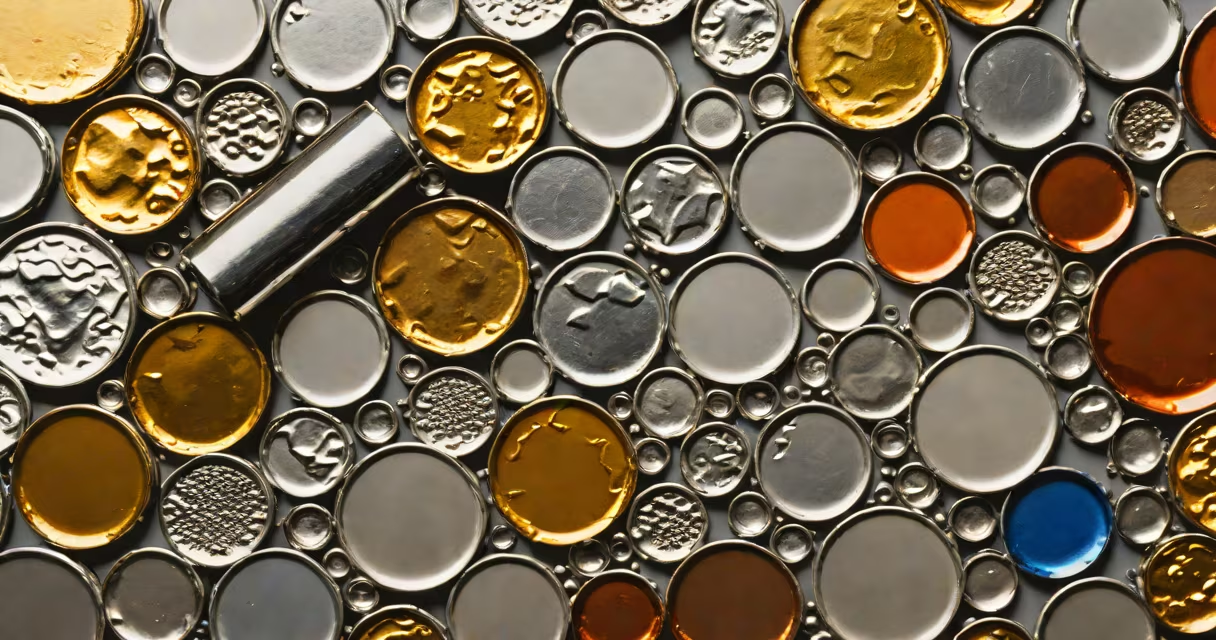
Metals that do not rust include stainless steel, titanium, and aluminum. These materials resist oxidation in water and air due to protective surface layers formed by alloying elements or natural passivation.
Rust specifically refers to iron oxide, which forms when elemental iron reacts with oxygen and moisture. Pure iron and most carbon steels corrode rapidly under humid conditions. However, certain metals avoid this process through chemical design or inherent stability.
Stainless steel contains at least 10.5% chromium, which creates a self-repairing oxide layer that blocks further reaction. Titanium forms a dense, stable oxide film that resists chloride attack. Aluminum develops a thin, adherent oxide coating that protects the bulk material from deeper oxidation.
Corrosion begins when a metal's atoms lose electrons to oxygen or water. Iron readily gives up electrons, forming Fe²⁺ ions that combine with oxygen and water to create hydrated iron(III) oxide-rust. This flaky layer offers no protection and allows continued degradation.
Non-rusting metals prevent this cycle. Chromium in stainless steel oxidizes instantly upon exposure, forming Cr₂O₃-a passive layer only nanometers thick but effective. This barrier stops oxygen diffusion and halts further corrosion, even if scratched.
Titanium's oxide layer (TiO₂) is thermodynamically stable and resists both acidic and alkaline environments. It remains intact in seawater, chlorine-rich solutions, and high-temperature steam. Aluminum's oxide (Al₂O₃) is similarly inert and self-healing when damaged.
The following metals and alloys are known for resisting rust and corrosion:
| Metal/Alloy | Key Resistance Mechanism | Common Uses |
|---|---|---|
| Stainless Steel (e.g., 304, 316) | Chromium-enriched passive film | Kitchenware, medical tools, marine fittings |
| Titanium (Grade 2, 5) | Natural TiO₂ layer | Aerospace parts, prosthetics, desalination plants |
| Aluminum (6061, 7075) | Self-passivating Al₂O₃ layer | Aircraft frames, window frames, cookware |
| Gold, Platinum | Extremely low reactivity | Jewelry, electronics, catalysts |
Not all metals labeled "non-rusting" are immune under all conditions. For example, 304 stainless steel can suffer pitting in saltwater if chloride levels exceed 50 ppm. 316 grade includes molybdenum to improve resistance to chlorides.
Aluminum does not rust, but it can corrode via galvanic reactions when paired with dissimilar metals in moist environments. A joint between aluminum and copper in a boat hull may lead to rapid degradation unless isolated.
Stainless steel is standard in food processing equipment because it won't leach iron into products and withstands frequent cleaning with harsh chemicals. The FDA requires 304-grade stainless steel for contact surfaces in commercial kitchens.
Titanium's strength-to-weight ratio exceeds that of steel while maintaining excellent corrosion resistance. In aircraft, titanium components reduce weight and increase fuel efficiency. A single Boeing 787 Dreamliner uses over 15,000 pounds of titanium.
Aluminum is widely used in construction for window frames and roofing. Its light weight reduces structural load, and its reflective surface lowers building cooling costs. A 2021 study by the Aluminum Association found that aluminum-framed buildings consume 18% less energy annually than steel-framed ones.
Many assume that "non-rusting" means "never degrades." This is false. All metals degrade over time under extreme conditions. Stainless steel can fail through stress corrosion cracking in hot chloride environments. Titanium can embrittle in hydrogen-rich atmospheres.
Another error is equating "non-rusting" with "maintenance-free." Even corrosion-resistant metals require care. Aluminum windows need periodic cleaning to prevent buildup of salts and pollutants that can breach the oxide layer. Stainless steel sinks can develop brown stains from iron particles in tap water if not rinsed after use.
One non-obvious fact: gold and platinum don't rust, but they are not typically called "non-rusting" in engineering contexts. Their value lies in electrical conductivity and catalytic activity, not corrosion resistance. Engineers focus on practical performance, not aesthetic longevity.
Consider a dock fitting made from 316 stainless steel versus a regular steel bolt. The 316 version is used in coastal marinas because it resists saltwater corrosion. A 2019 NACE International report showed that 316 stainless bolts lasted over 15 years in seawater, while mild steel bolts failed within 18 months.
Even with proper material choice, installation matters. A stainless steel bolt threaded into a steel plate without isolation can cause galvanic corrosion. The difference in electrochemical potential drives electron flow, accelerating degradation. Using insulating washers prevents this.
When replacing hardware on a boat, choosing 316 stainless steel over plain steel avoids costly repairs and safety risks. The initial cost is higher-about 30% more-but long-term savings exceed 50% due to reduced maintenance and failure rates.
I once installed a stainless steel railing on a seaside deck using 304-grade bolts. After four years, the structure remained intact with no visible pitting. In contrast, a neighboring deck with untreated steel bolts had significant rust and required replacement. The stainless steel cost more upfront, but the durability justified the investment.
For applications involving moisture, temperature extremes, or chemicals, selecting the right metal is critical. Always consider environment, load, and interface materials-not just the base metal.
Understanding what metal does not rust involves knowing not just the materials, but their limitations and interactions. Stainless steel, titanium, and aluminum offer reliable performance in demanding settings, but they are not invincible. Proper selection and maintenance ensure longevity.