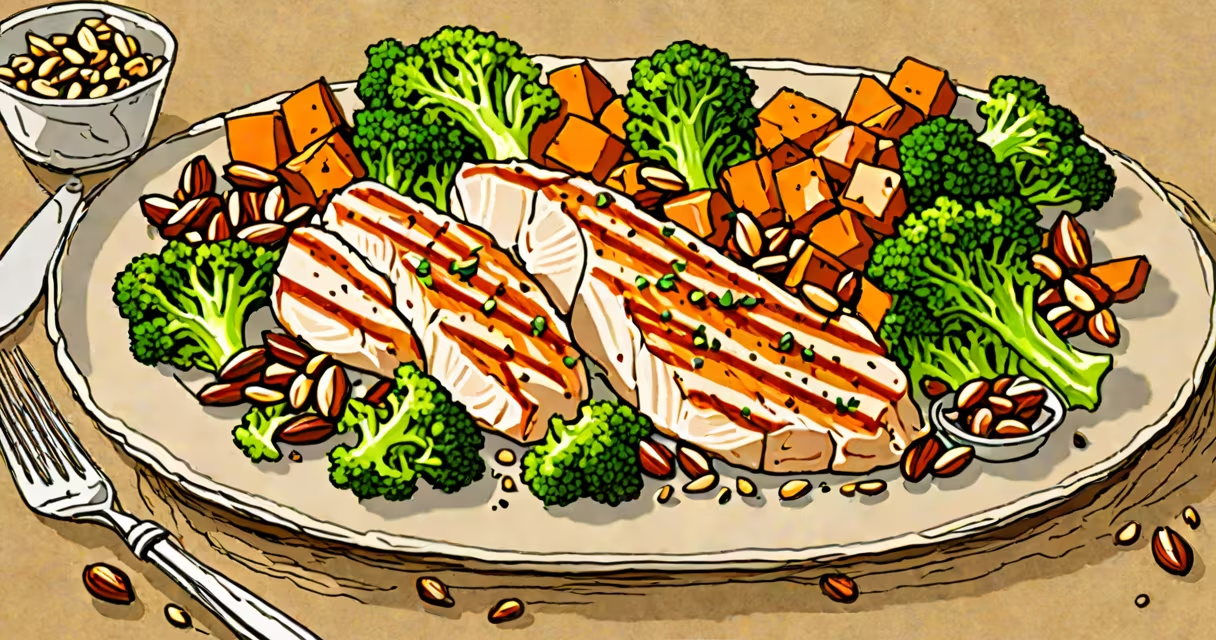
What to eat when trying to gain muscle centers on consuming sufficient protein, complex carbohydrates, and healthy fats in a consistent calorie surplus to support muscle repair and growth. Prioritize whole, minimally processed foods to fuel workouts and recovery.
Muscle growth requires both mechanical stress from resistance training and adequate dietary intake. Without enough calories and nutrients, especially protein, the body cannot synthesize new muscle tissue effectively. A 2023 review in Frontiers in Nutrition confirmed that protein intakes between 1.6 and 2.2 grams per kilogram of body weight daily are optimal for muscle hypertrophy in trained individuals.
For a 70 kg (154 lb) person aiming to build muscle, this translates to 112-154 grams of protein per day. This level exceeds the general RDA of 0.8 g/kg but aligns with recommendations from the American College of Sports Medicine (ACSM).
Protein is the primary building block for muscle fibers. Lean animal sources like skinless chicken breast, turkey, eggs, and fatty fish provide complete amino acid profiles. Plant-based options such as lentils, tofu, tempeh, and edamame work well when combined strategically.
Complex carbohydrates supply energy for intense training sessions. Whole grains like oats, brown rice, quinoa, and barley sustain blood sugar and replenish glycogen stores. Sweet potatoes and whole-grain breads are effective additions.
Healthy fats support hormone production, particularly testosterone, which influences muscle development. Include avocados, nuts (almonds, walnuts), seeds (chia, flax), and olive oil in meals.
| Nutrient | Recommended Daily Intake | Food Examples |
|---|---|---|
| Protein | 1.6-2.2 g/kg body weight | Chicken breast (31g/100g), Greek yogurt (10g/100g), lentils (9g/100g) |
| Carbohydrates | 4-7 g/kg body weight | Oats (55g/100g), sweet potato (20g/100g), quinoa (21g/100g) |
| Fat | 0.8-1.0 g/kg body weight | Avocado (15g/100g), almonds (49g/100g), olive oil (100g/100g) |
A common mistake is assuming that eating large amounts of protein alone leads to muscle gain. Excess protein beyond what the body uses for repair and synthesis is either converted to glucose or stored as fat. The 2022 study by Schoenfeld et al. in Journal of the International Society of Sports Nutrition found no additional muscle growth from exceeding 2.2 g/kg/day.
Consuming protein within two hours post-workout maximizes muscle protein synthesis. A meal containing 20-40 grams of protein, paired with 30-60 grams of carbs, supports recovery and replenishes glycogen.
Consider this real-world example: a 200-pound (90.7 kg) lifter aiming to gain 0.5 kg (1.1 lbs) of muscle per month. They require ~2,800 kcal/day (maintenance) plus ~500 kcal surplus, totaling ~3,300 kcal/day. Their protein goal is ~180 grams/day.
A sample day might include:
Total daily intake: ~3,400 kcal, ~185g protein, ~420g carbs, ~110g fat. This meets goals while staying whole-food focused.
Many assume supplements like creatine or protein powders are essential. While they can improve results, they're not required. A 2021 meta-analysis in European Journal of Sport Science showed that creatine supplementation increased strength gains by ~5% over placebo, but only when combined with resistance training.
Another error is focusing solely on volume. Gaining muscle without gaining fat requires a controlled surplus-typically 0.25-0.5% body weight gain per week. Rapid weight gain often means excess fat accumulation.
I once observed a client who ate 5,000 kcal/day with 300g protein, yet gained mostly fat. His training was inconsistent, and he skipped post-workout meals. After adjusting his routine to include structured lifting and timed nutrient intake, he gained 3 kg of lean mass over 12 weeks with minimal fat gain.
Individuals with kidney disease should consult a physician before increasing protein intake. High protein diets may strain renal function in those with pre-existing conditions.
What to eat when trying to gain muscle is not about extreme diets or magic foods. It's about consistency, proportionality, and alignment with training intensity. Focus on real food, track intake, and adjust based on progress-not just scale numbers.