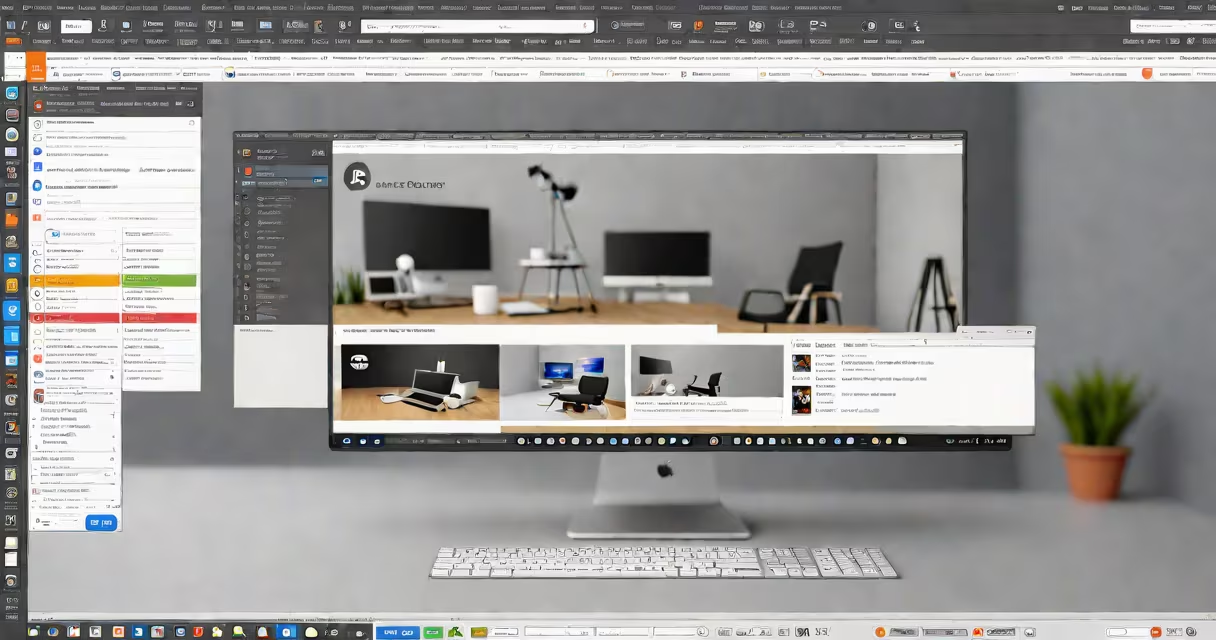
An online site editor is a web-based tool that allows users to build, modify, and manage website content through a visual interface without writing code. It enables real-time changes to text, images, layouts, and navigation using drag-and-drop functions or inline editing.
These editors run in a browser and connect directly to a hosting platform or content management system (CMS). They support collaborative workflows, version history, and immediate preview of updates. Users don't need to install software or understand HTML or CSS to publish content.
Popular platforms like WordPress, Wix, Squarespace, and Shopify use integrated online site editors. These tools are central to creating and maintaining websites for blogs, portfolios, e-commerce stores, and corporate sites.
When you open an online site editor, you access a dashboard that displays your site's structure. You can click on any element-like a headline, image, or button-to edit its content or styling. Changes appear instantly in a preview window.
Behind the scenes, the editor sends edits to a server via an API. The updated content is saved to a database and served to visitors when they load the page. This process happens in seconds, enabling live publishing.
For example, updating a product price on an online retail site takes less than 30 seconds. You click the price field, type the new value, and confirm. The change appears on the site immediately across all devices.
Online site editors fall into two categories: visual builders and inline editors. Visual builders offer a full-page canvas where you arrange elements by dragging them into place. Inline editors allow editing directly within the page content, usually by clicking on text.
Visual builders are ideal for designing entire pages from scratch. They include tools for setting margins, adding sections, inserting forms, and choosing color schemes. Inline editors are better for quick content tweaks, such as fixing typos or updating event dates.
| Type | Best For | Example Tools |
|---|---|---|
| Visual Builder | Designing new pages, full site layouts | Wix Editor, Webflow Designer |
| Inline Editor | Editing existing content quickly | WordPress Gutenberg, Shopify Theme Editor |
A key feature is responsive design control. Editors let you adjust how content appears on mobile, tablet, and desktop screens. You can toggle between viewports and see layout shifts in real time.
Some editors integrate AI-powered suggestions. For instance, an online site editor may recommend image crop ratios based on common screen sizes or suggest alt text for accessibility. These features reduce manual effort and improve compliance with web standards.
Businesses use online site editors to maintain their online presence without hiring developers. A small bakery can update its menu daily using a simple editor, while a fashion brand like Zara uses a more advanced version to manage seasonal collections across regions.
The zara online site relies on a custom online site editor that supports multi-language content, changing product filtering, and real-time inventory sync. This helps when a store sells out of a size, the website reflects that change within minutes.
Content teams at news organizations also depend on online site editors. Journalists can draft articles in a rich-text environment, attach photos, and schedule publication-all without touching backend code.
Nonprofits use these tools to launch donation campaigns quickly. A campaign page can be created in under 15 minutes using templates and pre-built components like progress bars and call-to-action buttons.
Many assume online site editors limit design flexibility. That's incorrect. Modern editors support custom CSS, JavaScript snippets, and integration with third-party services like Google Analytics and email marketing platforms.
Another myth is that these tools produce slow-loading websites. Performance depends on the underlying platform, not the editor itself. A well-configured site using a lightweight theme and optimized media files loads faster than a hand-coded site with unminified scripts.
One non-obvious fact: some online site editors do not save content locally. All edits are stored on remote servers. If you lose internet access during editing, unsaved work may be lost unless the editor auto-saves frequently. Always check the auto-save interval-most systems save every 30 seconds.
I once managed a site migration for a nonprofit using a free online site editor. After importing 400 pages, I noticed inconsistent heading structures. The editor didn't flag missing H1 tags. I had to manually audit each page using a browser dev tool. This taught me that visual ease doesn't replace technical validation.
An online site editor differs from a code editor like VS Code or Sublime Text. Those tools require programming knowledge and are used to write or debug source code. An online site editor focuses on content and presentation, not syntax.
It also isn't the same as a static site generator like Jekyll or Hugo. These tools compile content into HTML files offline, often requiring command-line access. Online site editors operate in real time and serve content dynamically.
Finally, an online site editor is not a standalone application. It runs in a browser and depends on cloud infrastructure. You can't use it offline unless the platform offers a desktop app with cached data, which most don't.
Consider updating a product listing on an online retail site. You log in, go to the product editor, and find the current description:
• 100% cotton
• Machine wash cold
• Imported
You want to add care instructions for dry cleaning. Click the text area, paste:
• Dry clean only
• Do not bleach
Click "Save." The change appears on the live site within 5 seconds. Visitors see the updated info immediately, regardless of location or device.
This workflow is standard across platforms. The editor handles formatting, image resizing, and metadata tagging automatically. No developer involvement is needed.
Understanding how an online site editor functions helps you make informed choices when selecting tools for your project. Whether managing a personal blog or running a global e-commerce operation, the right editor streamlines content delivery and improves site performance.
With proper configuration and attention to detail, an online site editor becomes a useful asset in digital communication.